
Tracing Former Appomattox County Owners
Start with one parcel and a deed you trust. Then step backward through the grantor-grantee chain, one transfer at a time. Each older record may carry a different name spelling. It may show an outdated road name. It may even hold a legal description with no street address at all. In Appomattox County, the date decides the next source. The route may run through SRA or a surviving deed book. It may lead to a land-tax book. Or it may end up in the records of a predecessor county.
| Transfer point | Index route | Record clue | Next check |
|---|---|---|---|
| Known grantee | Search the deed index for the latest conveyance | Grantor, legal description, book/page or instrument reference | Confirm the same tract before stepping back. |
| Prior grantor | Search that name as grantee | Earlier conveyance and parcel language | Compare acreage, adjoining land and references. |
| 1892 record break | Library microfilm and surviving land-tax books | Books and grantor/grantee indexes begin in 1892 | Check predecessor counties for earlier deeds. |
| Estate transfer | Circuit Clerk probate and land index | Will, fiduciary appointment, executor or distribution deed | Match the final recorded instrument to the land. |
The county publishes no firm start year for its online index. Treat that cutoff as unknown until the Circuit Clerk tells you where remote searching ends. A missing online entry is not proof of a gap in the property's history.
Appomattox County Deed Book Runs
The Library of Virginia catalog maps the surviving deed books. Book 1 covers 1892-1894, Book 2 covers 1892-1895, and Book 3 covers 1894-1897. Book 4 spans 1892-1909, Book 5 runs 1897-1900, Book 6 covers 1900-1902, and Book 7 reaches into 1904. The General Index grantor and grantee volumes span 1892-1916. Dates overlap between books by design. That overlap is part of the surviving record set, not an error to fix. Many reels circulate through interlibrary loan. The catalog lists collection numbers and page ranges, so use them to order the right film. Keep expectations straight: these cataloged microfilm runs say nothing about the online index start year, and remote image access is a separate question. For the current statewide index route, see the Virginia Courts SRA access explanation, which separates index availability from deed-image access, since images can require a subscription or Clerk authorization.
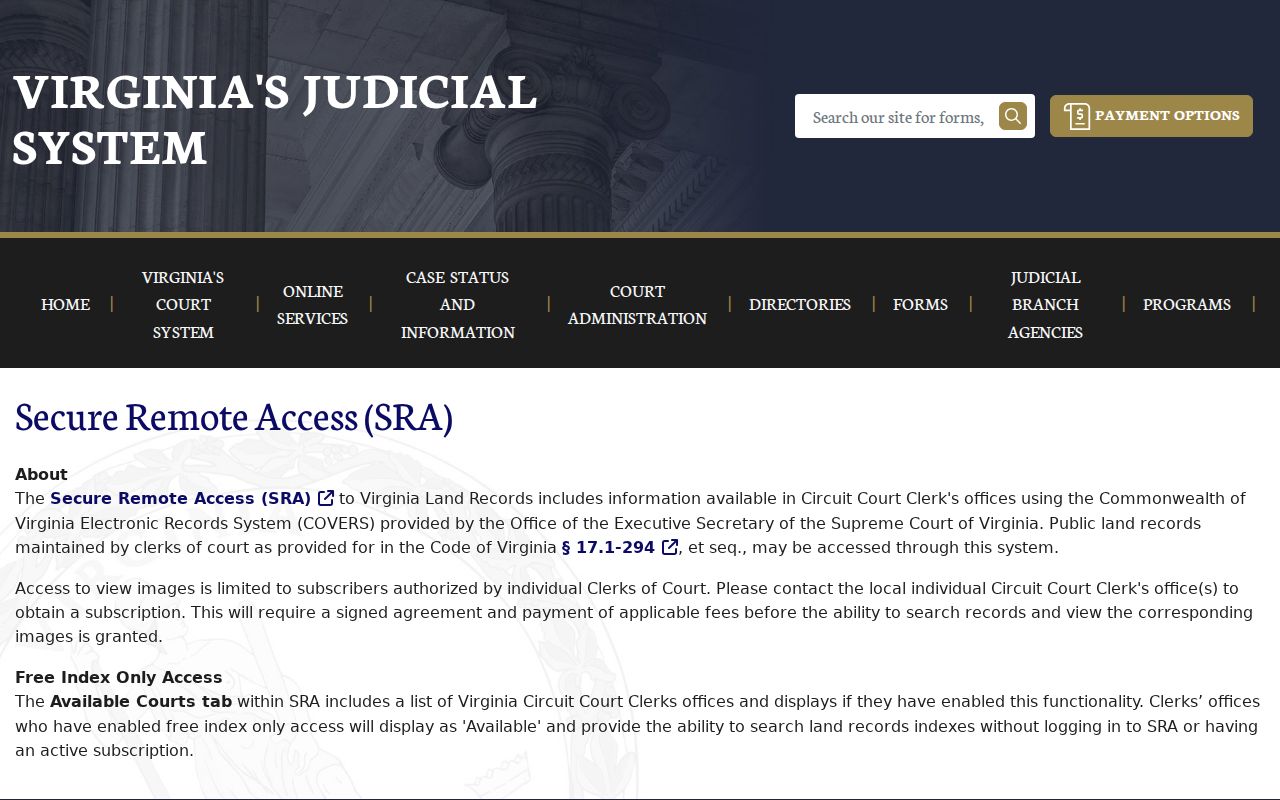
That statewide notice explains why an index entry can appear while a former-owner deed image stays locked behind separate access. The Appomattox County microfilm catalog is the finding aid for reel and book details.
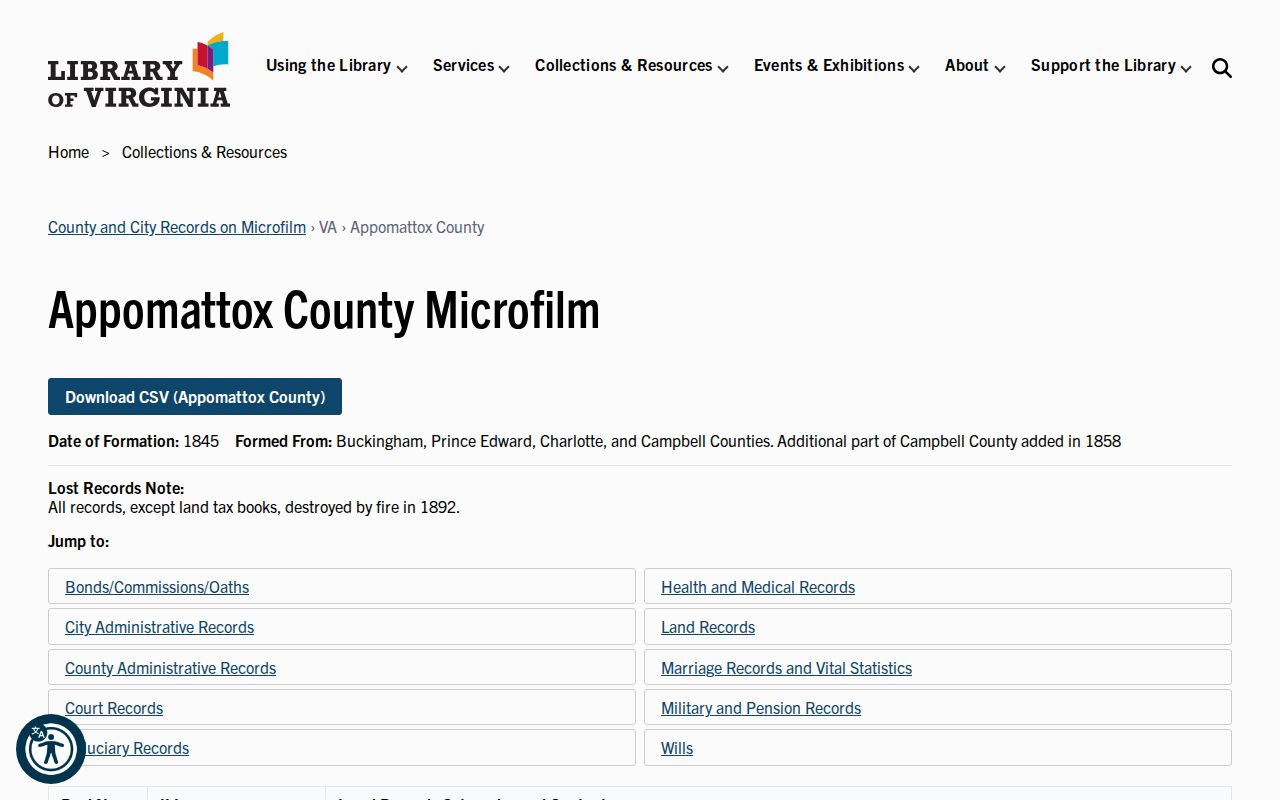
The catalog points a former-owner search to the right film before anyone orders or visits a reel.
The Fire and Appomattox County Land Tax
A courthouse fire on February 1, 1892, destroyed Appomattox County records. One great exception survived: the land-tax books. Those tax books become an unusual bridge whenever a deed chain runs back past the fire. A tax entry can place a landholder in a given year. It is not a deed, and it proves no conveyance. When a pre-fire deed is missing, follow the parcel through the tax-book sequence instead. Watch for shifts in name, acreage, or district from one year to the next. The archive can confirm how far the land-tax run extends. The Historical Society's "Burned Years" transcriptions offer useful leads. But verify every transcription against microfilm or an official instrument. The Library of Virginia's locality catalog identifies what holdings exist.
Walking the Appomattox County Deed Chain Backward
Work backward from the newest conveyance. Move from grantee to grantor, transfer by transfer. A chain holds only while the legal description tracks the same land, because one person can own several tracts and a single deed can convey part of one. The book, page, or instrument reference then leads to the full recorded text.
- Locate the most recent deed for the parcel and note the grantee, grantor and complete land description.
- Search the grantor as a prior grantee and find the instrument that vested the land in that person.
- Compare acreage, adjoining calls and any referenced plat or earlier deed before accepting the match.
- Repeat until the SRA index stops, then use the Clerk's cutoff guidance and cataloged books or tax records.
- Grantor
- The party who transferred an interest in that instrument.
- Grantee
- The party who received the interest being conveyed.
- Chain of title
- The ordered sequence of recorded transfers linked to the same land.
- Legal description
- Boundary language that can remain useful after road names or addresses change.
Not every instrument is a plain sale. A deed, executor deed, correction, or release can bend the chain. When that happens, branch out to the estate file, the earlier conveyance, or the lien record rather than forcing the document into a simple buyer-seller line.
Earlier Appomattox County Owners
Appomattox County was organized in 1845 from Buckingham, Prince Edward, Charlotte, and Campbell counties. Campbell contributed more land in 1858. A tract that sits in Appomattox today may have been conveyed under a predecessor jurisdiction. A search confined to Appomattox County can therefore miss older deeds, even when tax rolls or later records point to an earlier owner of record. Use the locality, the parcel description, and the deed date. Pick the right predecessor clerk's records with those clues. Never assume today's county line existed when an older deed was filed. The Library of Virginia's catalog and lost-records resources help map a route. The Circuit Clerk can confirm which county's instrument belongs in the chain. For anything dated before 1845, treat the historical jurisdiction at the time of conveyance as the search clue. Land later placed in Appomattox may sit in a predecessor county's deed books. The Campbell addition of 1858 adds one more boundary change to weigh. Do not project the current county name backward onto the whole chain of title. Log every source in the chronology. Record the locality, the record series, book and page, instrument date, and the legal-description phrase that ties the entry to the parcel. That discipline lets you test an old description instead of joining records on a shared surname alone.
Using Surviving Appomattox County Land-Tax Books
Land-tax books are among the few county record series reported to survive the 1892 courthouse fire. The fire destroyed most other records. That makes them a rare window. When a deed series has gaps, a tax entry can supply a parallel lead. An older chain may point to a predecessor county too. But an assessment is not a conveyance. Treat the owner name, the year, and the parcel description as clues. They point toward a deed, a probate filing, or another land record.
Ask the Clerk or the relevant archive which year and volume cover the parcel. Do this before requesting a search. A tax listing can bridge two known dates in a chain. It cannot establish when or how title legally changed. Record the source year, and keep that distinction clear in any title chronology.
Estate Transfers in the Deed Chain
An owner's death often puts an executor, administrator, heir, or trustee into the deed chain as the next grantee. Appomattox County's Circuit Clerk also serves as probate judge. That office holds wills, estate papers, fiduciary appointments, and recorded executor deeds. Read the probate file to see who had authority. Then find the deed or court order that links the estate to the real property.
VDH keeps death certificates. A certificate does not transfer title. A will may name a devisee, yet the recorded land instrument or court order is what ties that transfer to the parcel. Check the legal description. Then weigh the fiduciary capacity and the later deed rather than relying on a death notice or a family transcription.
How Far Back Appomattox County Ownership Records Go
The earliest confirmed surviving Appomattox County grantor and grantee indexes, held in the Library of Virginia catalog, begin in 1892 and run to 1916. That span is not an online SRA cutoff. Official pages never stated the Clerk's local endpoint. Nor is 1892 the start of ownership evidence itself. Land-tax books survived the fire, and predecessor-county records reach back before the county formed.
For a deeper search, combine the Circuit Clerk index, surviving deed-book reels, land-tax material, plat references, and predecessor-county files. A missing online result proves little. Earlier ownership records can still exist. Ask the archive about the exact reel, page span, and access route before concluding how far the chain reaches.
Lawful use. Use former-owner research for house history, title work and parcel diligence. Do not use names from Appomattox County records to track, threaten or harass anyone.