
Appomattox County Deed Records and Transfers
The Circuit Clerk serves as Appomattox County's recorder of deeds. A recorded conveyance names the parties and describes the land, while other instruments can create or release interests without ever changing the owner of record. Deeds, deeds of trust, releases, liens, plats, and judgments all sit among the Clerk's holdings. The table below describes the common purposes of these records rather than an exact local dropdown menu, since the state system's full instrument-type list is not published for every clerk.
| Deed Type | What It Does | Common Use |
|---|---|---|
| Conveyance deed | Records a transfer and its legal description | Compare the grantee and prior grantor. |
| Deed of trust | Records a security interest tied to a loan | Search for a later release or satisfaction. |
| Release or satisfaction | Shows that a recorded interest was released | Match it to the earlier instrument. |
| Executor deed | May transfer land from an estate | Check probate and the estate file. |
| Plat | Shows a surveyed or platted division | Use the recorded version, not only GIS. |
A deed transfers an interest in land. A deed of trust or lien burdens it instead. One does not cancel the other, and both can surface in the same land-record system. Every release has to be found and tied back to the instrument it discharges. Read Appomattox County deed records as a running sequence of filings. Do not settle for a single current-owner line.
Free Index and Deed Images
Virginia Secure Remote Access, called SRA or COVERS, is the remote route into Appomattox County land records. State guidance allows a free index wherever an individual clerk turns on public access. Images work differently. A clerk may open them to subscribers under an agreement and fee schedule, so a search result can confirm a filing without letting every visitor view the page itself.
The Appomattox County Clerk's public page does not list the SRA cutoff year, the exact index fields, or certified-copy charges. Keep the party names, recording date, and book/page or instrument reference from any result you pull. When an image stays locked, ask the Circuit Clerk about the public counter or a copy request. The office sits at 297 Court Street, Suite B, Appomattox, Virginia 24522, open weekdays from 8:30 a.m. to 4:30 p.m.
The Virginia SRA overview explains the access split, and Appomattox County's land-record search is the direct index route.
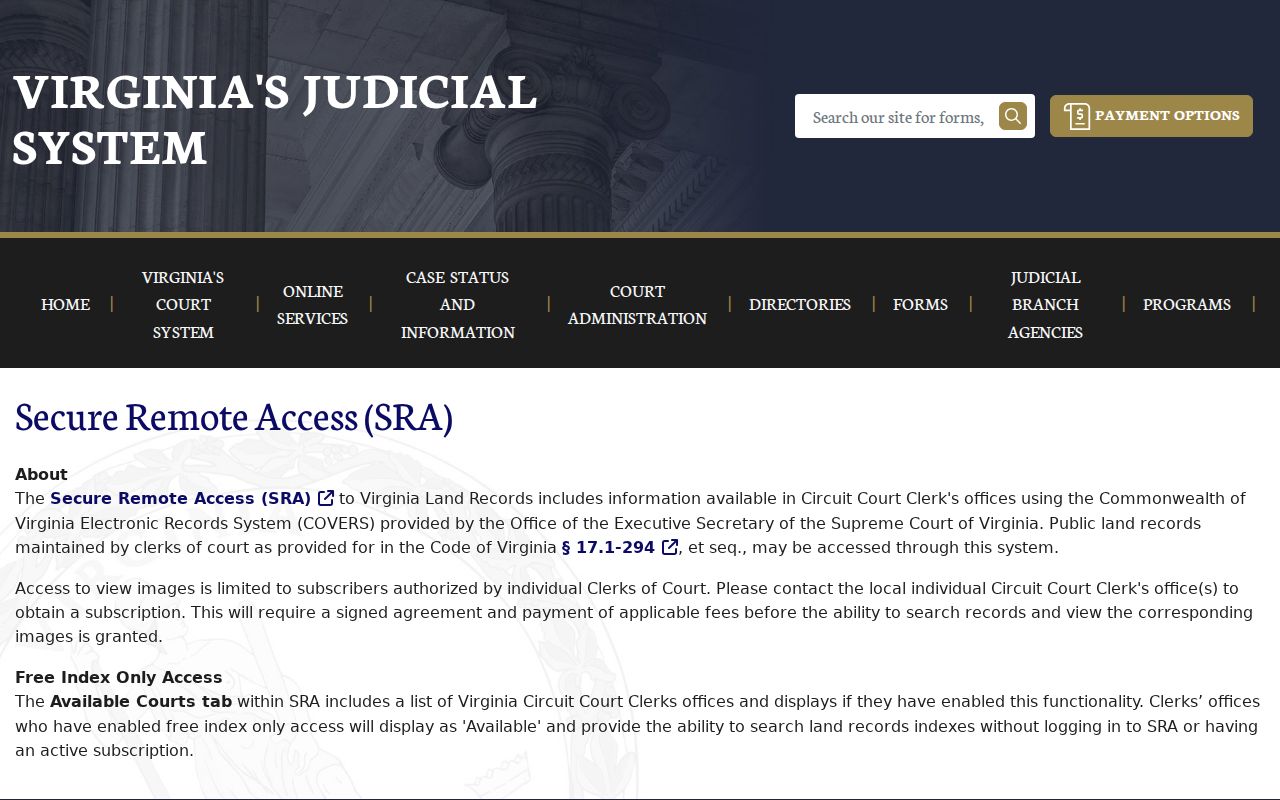
This state page explains why an index result and an open document image are two different levels of access.
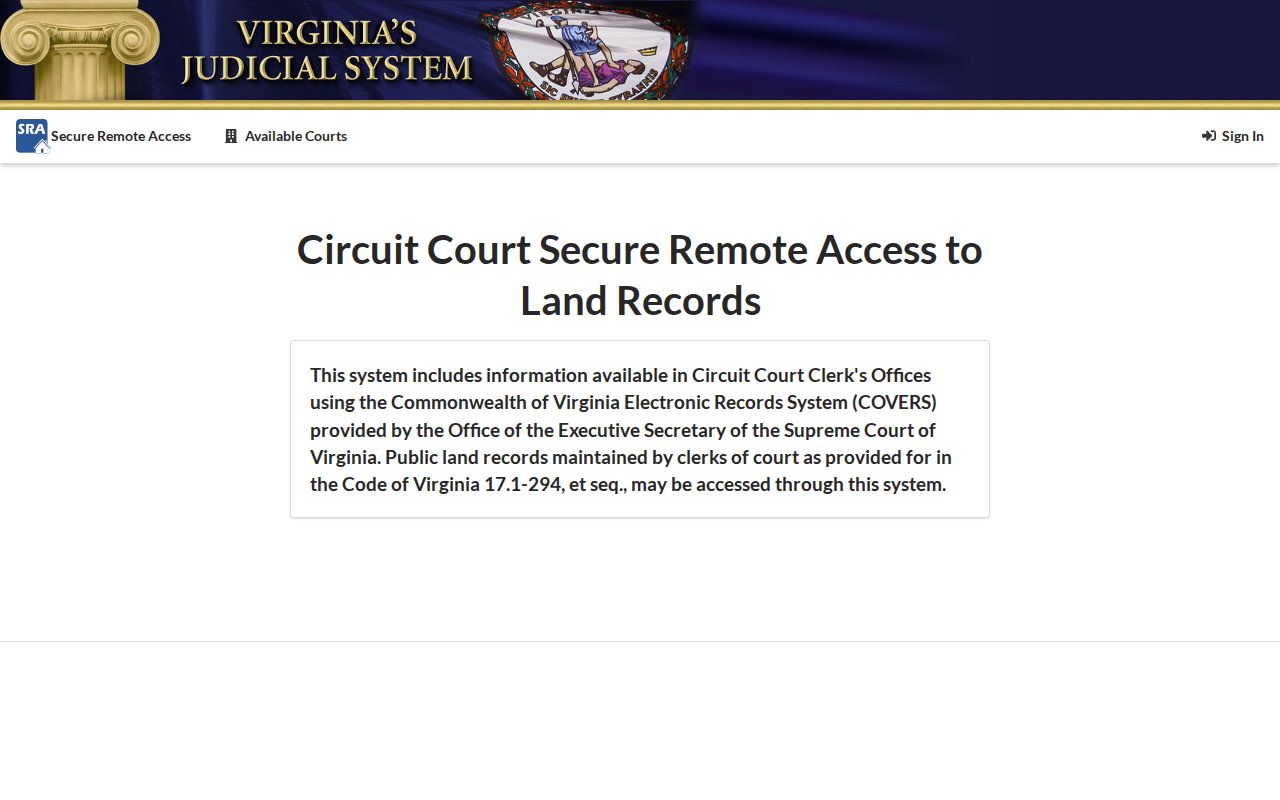
The land-record portal opens the index, while image access still turns on Clerk authorization and the terms a subscriber accepts.
The Appomattox County Grantor-Grantee Index
Appomattox County's SRA description confirms statewide land-record access under Code §17.1-294 et seq., though the public text does not show every local search-field label. In practice, search the grantor and grantee sides separately. The grantor transfers the interest. The grantee receives it. Because a common name can attach to many unrelated tracts, the instrument date and legal description carry the real weight.
- Search the present owner as grantee and locate the deed that describes the parcel.
- Read the grantor, legal description and prior recording reference on that instrument.
- Search the prior owner as grantee and compare the land description again.
- At the earliest available result, check the public cutoff with the Clerk and move to books or microfilm when needed.
- Grantor
- The person or entity conveying an interest in the deed.
- Grantee
- The party to whom the instrument conveys that interest.
- Chain of title
- The ordered line of recorded transfers for one parcel.
- Book and page
- A volume and page reference; retain any instrument number shown too.
For a current owner question, set the newest recorded conveyance beside the tax roll. Tracing backward means reading each grantor in turn. A prior owner match only holds when the land description, not merely the name, carries forward from one instrument to the next.
Details to Keep From an Appomattox County Deed Index
Before you leave an index result, capture the instrument type and recording date. Note the grantor and grantee names. Note any book, page, or instrument number on the screen. Those details let you request a specific copy from the Circuit Clerk. They also keep a deed from being confused with a release, deed of trust, or later corrective filing.
Next, match the document's land description against the CAMA map number or PRN. Match it against the parcel's situs address too. A party name alone can cover more than one tract. If an image sits behind a subscription, hand the Clerk the recording details and ask about authorized viewing or a copy. The county does not publish its local online cutoff or exact image fee.
Appomattox County's Fire-Broken Chain
Appomattox County was formed in 1845 from Buckingham, Prince Edward, Charlotte, and Campbell. A piece of Campbell was added in 1858. Then came the fire. On February 1, 1892, flames destroyed every county record except the land-tax books. The Library of Virginia's catalog lists replacement deed books starting in 1892. It also lists grantor and grantee indexes spanning 1892 to 1916.
Those catalog dates describe surviving microfilm, not the confirmed start of today's Appomattox SRA index. When an older chain breaks, lean on the land-tax exception. Lean also on the predecessor counties and Library of Virginia finding aids. The Appomattox Historical Society's “Burned Years” database can surface names transcribed from microfilm, but it remains a finding aid. Verify any clue against an official record or the underlying reel.
Check the Library of Virginia's Appomattox County collection catalog for reel and book details.
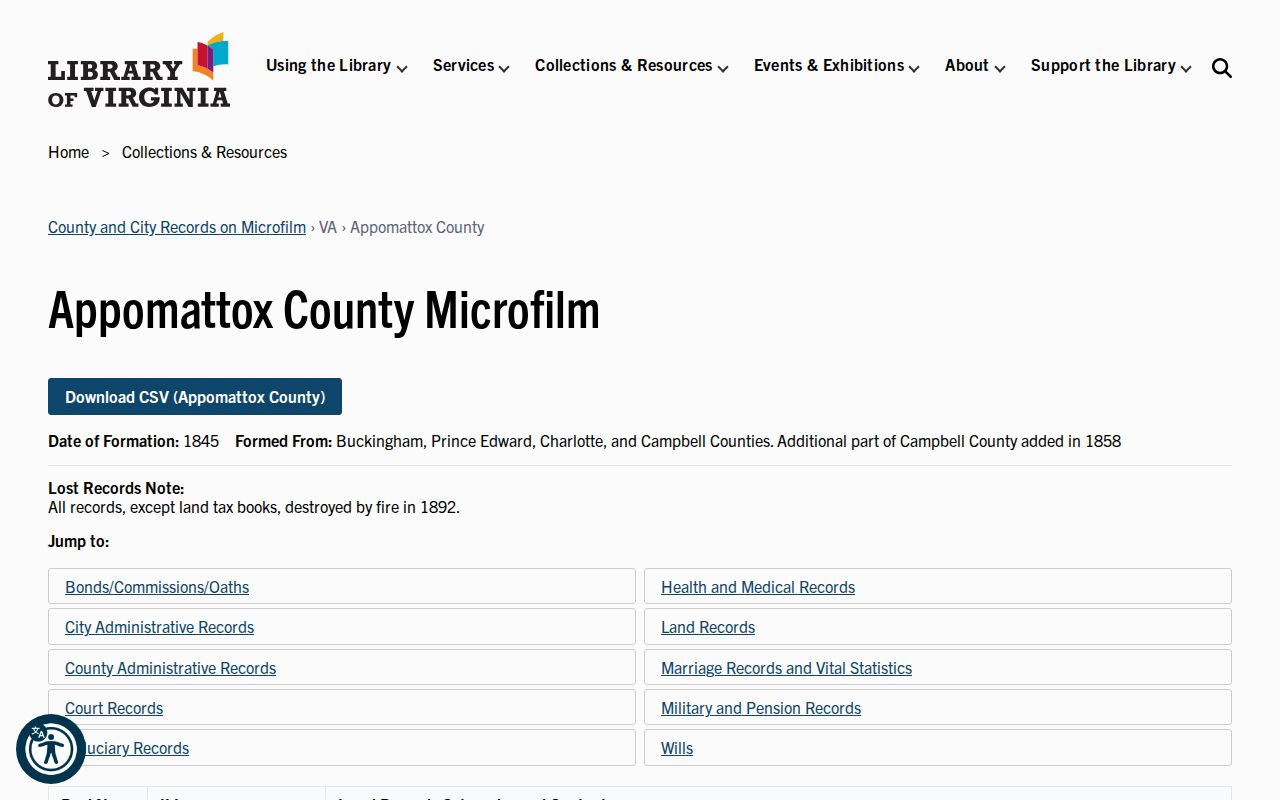
The catalog identifies post-fire deed books and the land-tax material that survived the loss.
Appomattox County Deeds and Liens
Deeds of trust, easements, assignments, releases, judgments and lis pendens all appear in the Appomattox County land index alongside ownership deeds. Search them together. A deed of trust secures a loan, an assignment can move that interest, and a release or satisfaction is the later filing that closes it out. Liens sometimes travel with a court case. The county index helps you locate instruments, though the local portal may not offer every record type. Cast a wide net.
The Appomattox County Treasurer can quote a tax balance, but that screen does not prove a recorded tax lien was released. Check the land index as well, and pull the Circuit Court case file when a lien has one. The free SRA index shows metadata, while the image requires authorized access. Carry instrument references forward. A search that stops at the first filing is incomplete. The release often comes later.
For each encumbrance, note the original recording reference and watch for a later instrument that addresses it directly. A deed of trust and its release stay separate. One parcel can hold several instruments. Party names often look alike, so match the land description and the book, page or instrument number. Never trust a search summary alone. An index result may belong to another tract. Compare acreage, parcel calls, subdivision references and adjoining boundaries before treating it as part of the chain.
Corrective deeds and partial releases can concern only part of the described land. When unsure, obtain the full documents and professional review. For prior holders in the chain, see Appomattox County former-owner records.
Appomattox County VADeed Alert
On March 19, 2026, the Clerk promoted VADeed Alert as a free, voluntary service for Virginia property owners. The service sends a notification when certain land instruments are recorded against a name or a Tax Map/Parcel ID. The county notice points owners to the Virginia Courts enrollment page. An alert prompts a timely check. It does not prevent a filing, insure title or replace the Clerk's record.
An unfamiliar instrument deserves a closer look. Compare the parcel identifier and recording reference against the official land index. The Clerk can be reached at 434-352-5275. Also ignore commercial letters demanding payment. The Clerk advertises a free service. Enroll through Virginia Courts VADeed Alert.
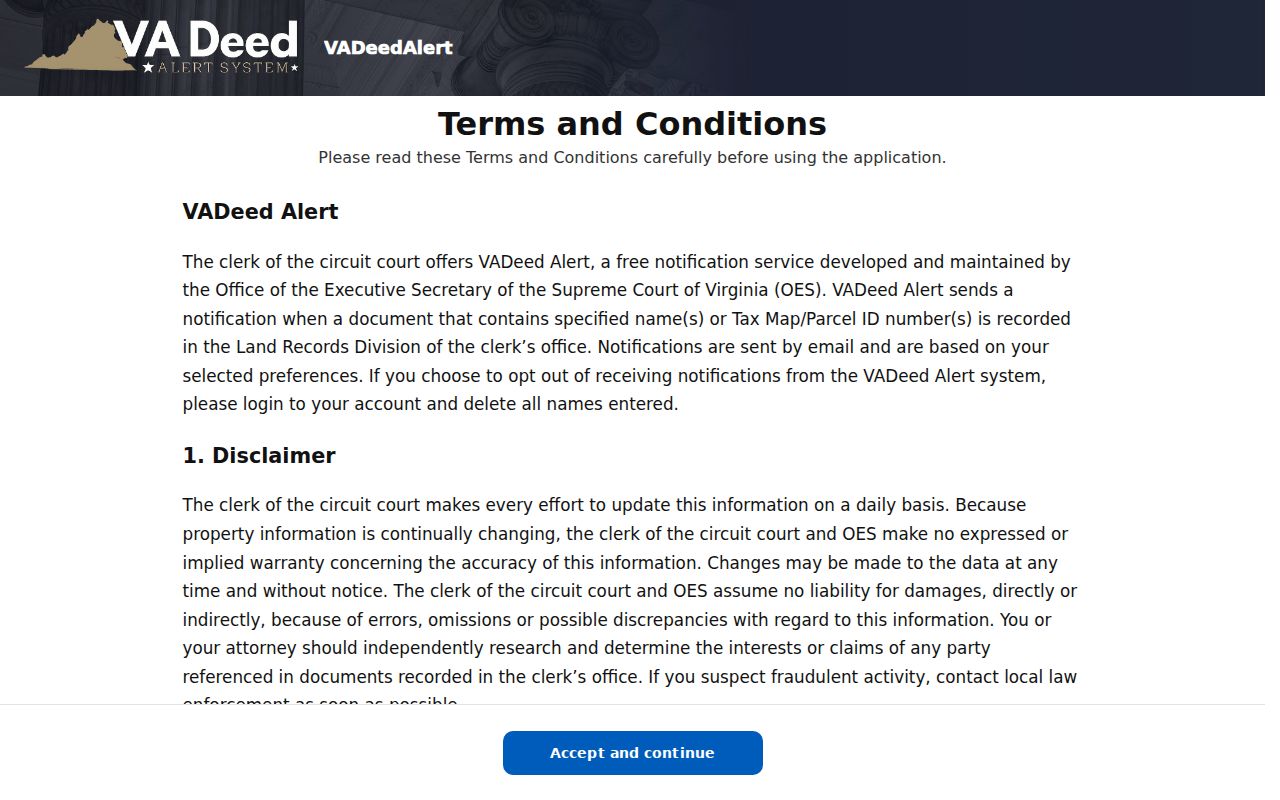
The alert screen supports a name or parcel-key watch for certain recorded instruments.
Getting a County Deed Copy in Appomattox County
Start with SRA. Identify the instrument. Note the parties, date and recording reference. If the image sits behind a subscription, ask the Circuit Clerk about a counter or copy route. Confirm any certified-copy fee directly. A guessed amount helps no one. Give the Clerk enough detail to distinguish the parcel and the document.
The Clerk's office handles deeds, probate papers, marriage licenses and Circuit Court files. Its Court Street address is the modern records destination. That is not the historic Appomattox Court House village. Mail requests should name the instrument and include a return address. Ask about certification, payment and whether a copy can be supplied remotely.
County FOIA is another route to nonexempt public records. Keep the request reasonably specific and send it to the custodian. Virginia Code §2.2-3704 sets a five-working-day response frame with permitted extensions, and fees cannot exceed actual access, search, supply or duplication costs.
Recorded, not guaranteed. Appomattox County deed records show indexed and recorded instruments, not every possible interest. A title search examines the chain and exceptions; the index alone does not certify clear ownership.